
From stone-ground single-origin chocolate to rare aged pu-erh, we build our collections around ingredients that deserve reverence. This is what happens when sourcing, technique, and uncompromising standards meet daily ritual.
getCanadaShrewms started in 2019 in a modest workshop off Horseshoe Way, born from frustration with the confectionery landscape available in the Lower Mainland. We wanted chocolate bars that tasted like their origin, gummies that honored European technique, and teas that told the story of their terroir, not mass-market approximations dressed in pretty packaging.
Richmond gave us proximity to some of the finest ingredient importers on the West Coast and a community of makers who understood that small-batch production isn’t a marketing angle, it’s a requirement. Our atelier remains here, tucked between industrial spaces and family-run warehouses, because this is where we can source honestly and craft deliberately. We’ve never wanted to be everywhere, we wanted to be here, doing this work the right way.
What was missing then, and what we’ve built since, is a place for people who want their indulgences to reflect intention. No shortcuts, no compromises, no apologies for being particular. Every bar, every tin, every pouch that leaves our workshop carries the same standard we held on day one.
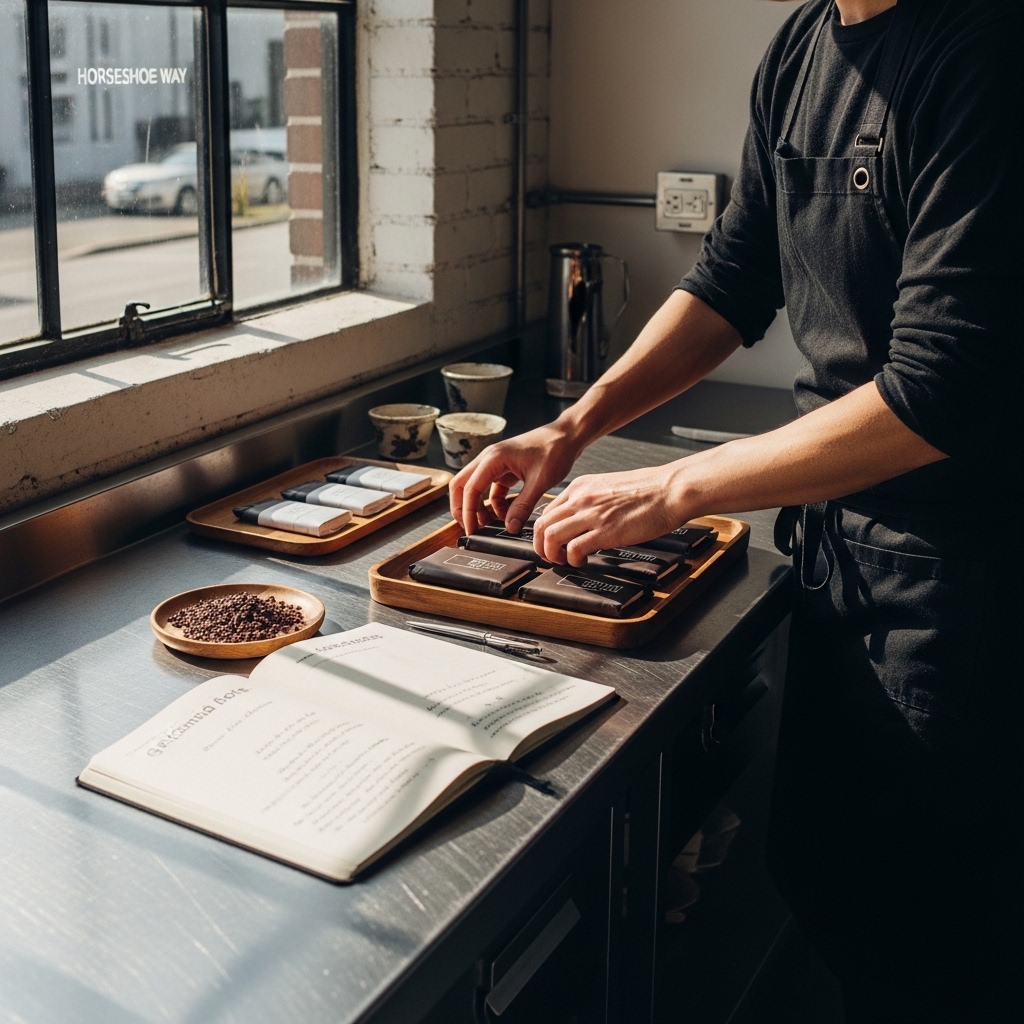
Every chocolate bar begins with whole cacao beans roasted in our atelier, cracked by hand, and stone-ground over 48 hours to develop texture and release the volatile compounds that give chocolate its depth. We temper in small batches on marble slabs, monitoring temperature by touch and sight, because machines can’t read the sheen and snap we’re after. Inclusions like candied ginger, toasted almonds, and Himalayan salt are added at the final stage, folded in by hand to preserve their integrity.
Our gummies are cooked low and slow in copper pots, fruit purée reduced with sugar and pectin until it reaches the exact set point that gives our gelées their characteristic firmness and clean break. Each batch is hand-poured into molds, left to cure overnight, then cut, dusted with fine sugar, and packed into tins. There’s no mechanization here because there’s no way to automate this level of control.
Tea blending happens in the same careful rhythm: leaves are weighed, inspected for uniformity, and combined according to ratios we’ve refined over years of cupping and tasting. We don’t over-blend or mask imperfections with flavoring oils. What you steep is what the garden produced, handled with the care it took to grow it.
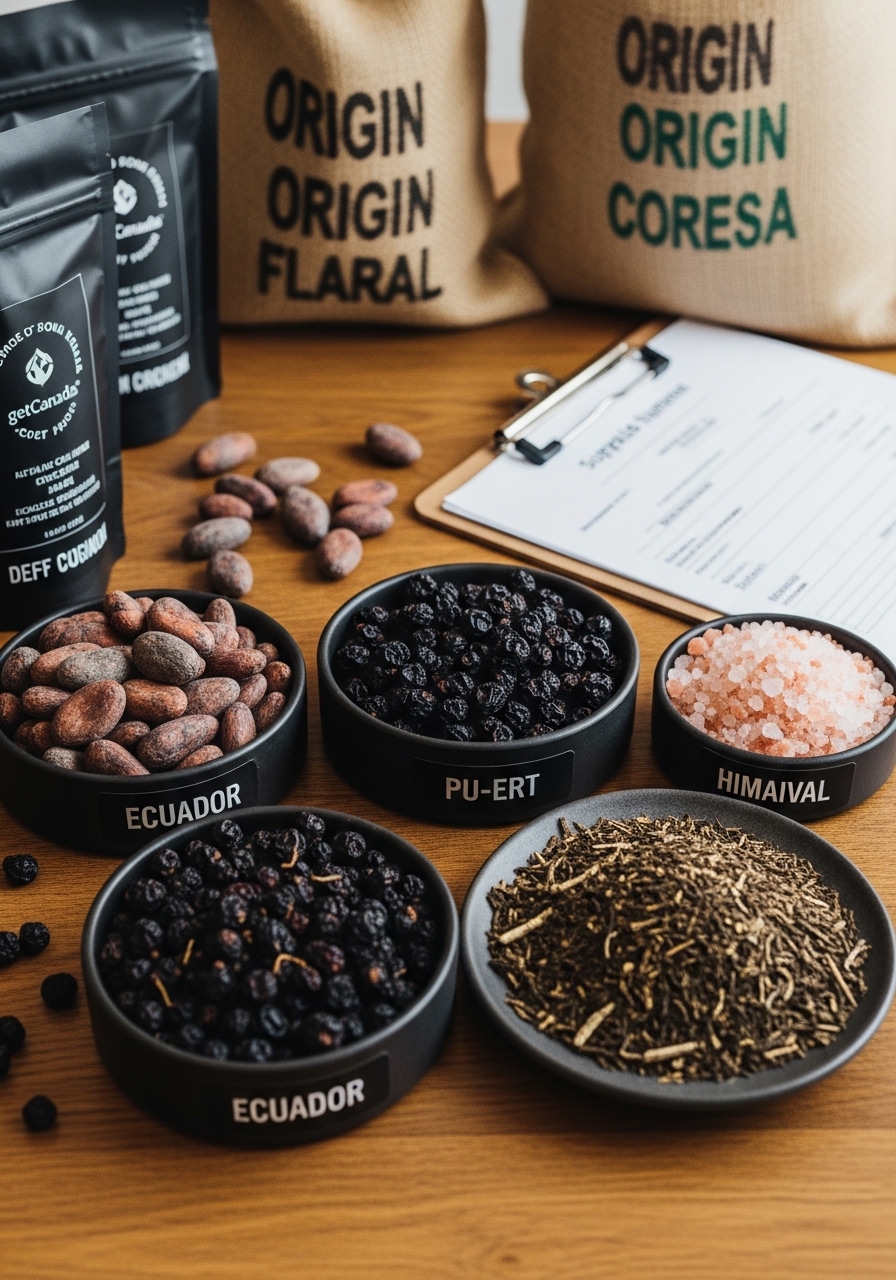
Our cacao comes from single-estate farms in Ecuador, Madagascar, and Venezuela, selected for varietal integrity and post-harvest processing that preserves the bean’s inherent flavor notes. We taste every lot before committing, looking for complexity, balance, and the kind of character that survives stone-grinding and conching. If it doesn’t reveal itself in the roast, it doesn’t make it into our bars.
The fruit purées in our gummies are sourced from European suppliers who cold-press and flash-pasteurize to retain the brightness and acidity that define a proper pâte de fruits. Black currants from Burgundy, blood oranges from Sicily, passionfruit from Colombia. We work with organic cane sugar and apple pectin because gelatin doesn’t belong in this tradition, and we won’t compromise texture for convenience.
Our tea comes directly from single-estate gardens and small cooperatives in Yunnan, Fujian, and Assam, regions where terroir isn’t a borrowed wine term, it’s the foundation of the leaf. We visit suppliers, review processing methods, and cup samples until we find the profile we’re looking for. Provenance isn’t decoration here, it’s the point.